 Problem Solving & Advice by Pam Johnson-Bennett Cat Behavior Expert & Best-selling Author
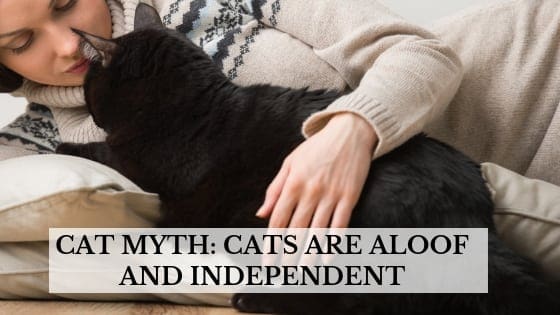
I began doing cat behavior consulting in 1982. Back then, it was very common to hear people referring to one myth or the other about cats. Many people were resigned to living with a cat who had behavior problems. Many didn’t feel it was worth putting much time and effort into it because everyone knew cats were aloof, independent, not affectionate, and certainly untrainable. While I never agreed with those myths, I did understand why people believed them because there wasn’t much accurate information out there about cats. What surprises me these days is that there’s so much information available and all you have to do is watch a social media video featuring cats to see that they are social, trainable and most definitely not aloof. People routinely mislabel cats are solitary as well so they never make an attempt to provide companionship for the cat no matter how lonely that the cat may be. The problem with our perception is that we keep comparing cats and dogs and trying to show one species is better than the other. The truth is that they’re just different.
No Aloofness Here
Cats are very tuned into their environment because they’re hardwired as predators. Their keen senses are on high alert for the sight, sound, or smell of potential prey. In addition to being predators, cats are also prey so being aware of what’s going on in their environment is critical. So what you may interpret as a cat being aloof is actually your exquisitely designed companion being ready for anything. Just because your cat may not jump to immediate attention when you call his name, doesn’t mean he’s aloof – he’s focused.

Affection
Cats show affection in so many ways and you might even not notice some of the more subtle ones. Your cat doesn’t have to be a lap cat to be affectionate. He may enjoy sitting next to you or maybe even a several inches away but that doesn’t mean he’s not affectionate. Think about how many times your cat has rubbed his head against you (head bunting), given you one of those slow-blink cat kisses, rubbed alongside of you, purred, or given you some scratchy-tongue kisses. Maybe your cat chirps or trills when you walk in the room. Those are all signs of affection. Most cats enjoy being petted as well but not necessarily in the same way you pet your dog. Most cats don’t enjoy having their bellies rubbed. You risk triggering a defensive response. Some cats may also have preferences when it comes to where on the body they like being petted or for how long. Some cats will enjoy a massage for extended periods and some prefer a drive-by stroke or two. Your cat spends a great deal of effort getting to know you as a companion, so if you do the same, you increase your chances of having the relationship you’ve always wanted with your feline family member. Cats are marvelous communicators and your own kitty tells you so much through body language. Pay attention to your cat’s signals and you’ll help create a stronger, more trusting bond.
Independence
While it’s true that in general, cats can be kept home alone for longer periods than dogs, they are still dependent on us and are not low-maintenance companions. The misconception that cats are independent and require little or no care causes many of them to suffer needlessly both physically and emotionally. Cats have the inaccurate label as solitary. They are solitary hunters but not solitary animals. Their social structure is centered around resource availability and safety. In a multicat household, if you make sure there are adequate resources for everyone spread through the home to allow cats to feel secure in their preferred core areas, they can be more relaxed about engaging in social behavior with you and with each other.
Cats need your companionship and in fact, some will go through separation anxiety if left alone too often or for too long – something most people only associate with their canine counterparts. A cat may not display separation anxiety in the way we associate with dogs so it can be easy to overlook the signs that a cat is concerned and confused.
Solitary or Social?
Cats are constantly called solitary creatures and that’s not accurate. Cats have a social structure built around the availability of resources. The misconception may come from the fact that because they’re small predators they often hunt alone because they go after prey that’ll only supply enough food for one. As previously mentioned, cats are also unique in that they’re predators but because of their size, they are also prey. They must be cautious in many situations.

I believe the other factor causing people to become confused about a cat’s sociability is that they’re territorial so intercat relationships must go through the delicate process of identifying and negotiating turf issues. You may have a dog who instantly becomes friends with almost any other dog he meets, so it may seem frustrating when you realize cat introductions won’t ever be accomplished that quickly. I’ve often said there’s a reason there are no cat parks in the world. Cat introductions require finesse and territorial negotiations. One cat isn’t going to happily bring a ball to the park with the hope he’ll find a cat pal.

If you just look at your cat’s world from his point of view you’ll see a wonderful companion who is ready to offer you so much love. Don’t compare cats to dogs — look at cats for the gorgeous animals that they are. Dogs are great at being dogs. Cats are great at being cats. Period.
Need More Information?
For more specific information on understanding your cat, refer to the best-selling books by Pam Johnson-Bennett. Pam’s books are available at bookstores and online. We’ve included links to Amazon here on our website.

If you have a question regarding your cat’s health, please contact your veterinarian. This article is not intended as a replacement for your cat’s veterinary care.
