 Problem Solving & Advice by Pam Johnson-Bennett Cat Behavior Expert & Best-selling Author
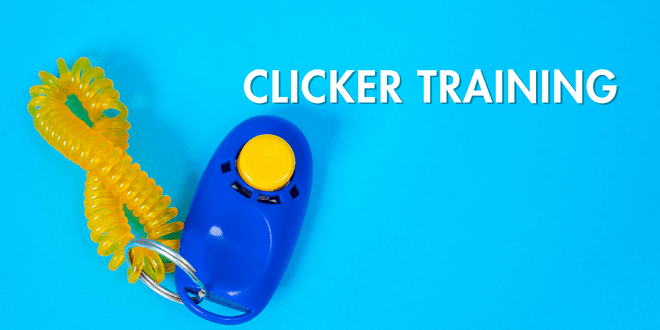
When you think of clicker training, you probably think of dogs. If you’ve heard of clicker training, chances are you’ve seen it being done in the middle of your local pet product store during puppy training classes. What about the idea of doing clicker training with a cat? Are you shaking your head at that thought? Everyone knows cats can’t be trained. Really? Well, how about the fact that your cat runs right into the kitchen every time she hears you pop open the top of the cat food can? That indicates she has learned to associate a particular sound with a desirable reward. That’s training.
Why Clicker Train Your Cat?
Clicker training helps your cat feel more in control in the environment. This type of training offers the cat a choice – and choice is very powerful when it comes to a cat feeling in control versus backed in a corner. When your cat feels more in control in her environment she’ll relax more and be less inclined to exhibit negative or defensive behaviors. The cat will also realize offering desirable behavior gets a reward but an undesirable behavior offers nothing. Cats are very smart so they quickly figure out that desirable behavior is more beneficial.
Clicker training provides you with an effective communication tool to use with your cat. You can click and reward for subtle behaviors that would typically be more difficult to acknowledge.

The Clicker
You’ll need a device known as a clicker. This is a small device that makes a cricket-type sound. The reason we use a clicker is that it’s a unique sound in the environment so kitty will know when she hears it, she has done something desirable. The clicker is used to mark the behavior you want from your cat when it’s displayed. The clicker communicates to the cat that a very specific behavior is desirable. Since most cats are very food-motivated you will immediately follow a click with a food reward. The cat learns the sound of the click means a reward will follow.
Clickers are available at your local pet product store as well as online. For timid cats who might be afraid of the clicker sound, put the clicker in your pocket when you click or drop it into a sock to muffle the sound.

Why do you need to use a clicker and not just merely toss a treat? Because the clicker is more immediate. You want the cat to know the behavior she displayed at that very nanosecond was exactly what you wanted. You can click faster than you can toss the treat.
Getting Started Clicker Training Your Cat
You first have to teach the cat to associate the sound of the clicker with the food reward. This is what gives the clicker its value. Break up pieces of treats or use a supply of dry kibble. Click the clicker and then toss a treat. If you feed your cat wet food you can place a small amount on a chopstick or on a soft baby spoon. Once you’ve clicked and then offered the food, wait for the cat to look at you before repeating the sequence. This helps your cat associate you as the supplier of the reward. Repeat the process about 10 times.

The first few sessions shouldn’t be very long. If your cat isn’t interested it might be because she isn’t hungry enough or the food reward choice isn’t motivating enough.
Rewarding Your Cat’s Good Behavior
Start with a basic behavior to practice clicker training. The easiest behavior to practice with is “sit.” Get on the floor in front of your cat. Hold a treat or a small amount of wet food on a spoon just slightly up and over her head. As she looks at the treat her hind quarters will probably naturally go into a sit. Don’t hold the treat too high or she’ll simply stand on her hind feet to reach up for it. As soon as she sits, click and reward. Timing is everything. As soon as the cat displays the behavior you want, click and reward. Repeat this exercise multiple times. Once she has the behavior down you can then put it on cue by saying “sit”. Soon you can phase out the food lure because she’ll know to respond to the verbal cue alone. Be consistent with always giving the treat after you click.
That’s Just the Beginning
There’s so much you can do with clicker training. You can teach your cat a variety of fun behaviors but you can also use it for behavior work by rewarding behaviors (however subtle) you want to see again. For example, when dealing with two cats who are hostile toward each other I will click and reward any positive or non-aggressive display a cat may display such as when one breaks a stare or when one cat enters a room where the other cat is located. Clicker training becomes a great way to change the cat’s mindset from negative to positive.

Need More information?
For information on cat behavior and training, refer to the books by Pam Johnson-Bennett. Pam’s books are available at bookstores and online. We have included Amazon links here on our website.
