 Problem Solving & Advice by Pam Johnson-Bennett Cat Behavior Expert & Best-selling Author
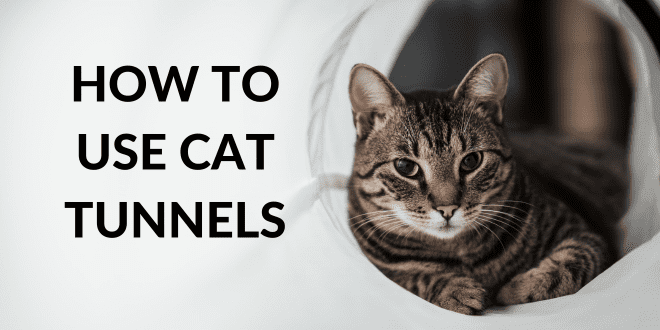
Cats usually love to play by hiding in things. Whether it’s an open paper bag or a box, your playful cat will find a way to make a game out of jumping in it, or will use it as an opportunity for an extra napping place. It’s an important part of environmental enrichment to supply those things for your cat’s fun and convenience but those bags and boxes can serve an even more important function in your cat’s life as well. They can provide security.
The Value of Cat Tunnels
If you have a cat who spends most of the time under the bed or in the closet, because he’s too frightened to step out into the open, you can use boxes and bags (along with commercially available kitty tunnels) to increase his comfort zone. The use of homemade or store-bought tunnels will allow a frightened cat to be able to feel protected enough so he can start to step out from an anchored hiding spot.
A frightened or unsure cat often chooses to remain as invisible as possible when having to navigate around a room. The cat may walk behind furniture or stay on the perimeter of the room. To walk through the open, more exposed center of a room requires more confidence. If your cat spends so much time in hiding, increase comfort levels so he can begin to explore more through the use of tunnels.
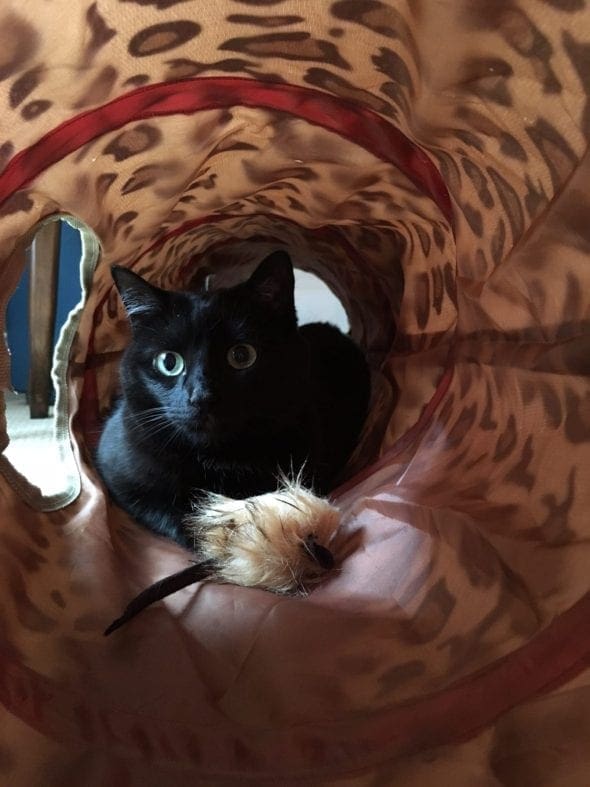
photo: Pam Johnson-Bennett
Types of Cat Tunnels
You can buy soft-sided cat tunnels at your local pet product store or online, or you can make your own. To make a paper bag tunnel, cut the bottoms of a few bags, then fully open them. Roll a one-inch cuff on the ends of each bag to increase the sturdiness. This will prevent the bags from collapsing so easily. Then, tape the bags end to end to form a tunnel.

To make a box tunnel, the easiest thing to do is to try to find a long box so you don’t have to tape a couple of boxes together. You can either cut the flaps off or tape them so they stay in the open position. If the box is big and your cat is small, leave one flap hanging down to provide just enough room for him to enter the tunnel while still offering more hiding ability.

Photo: Pam Johnson-Bennett
Tunnel Placement for Your Cat
This part is very important. If you have a new cat who is still in the sanctuary room, place the tunnels so they form a path to resources. The tunnels don’t have to totally cover the room; they just have to provide a little bit of coverage for the cat to feel a bit less exposed when he needs to go from under the bed to the litter box or to the feeding station. The ability to venture out will encourage the cat to feel safely check out the new surroundings.
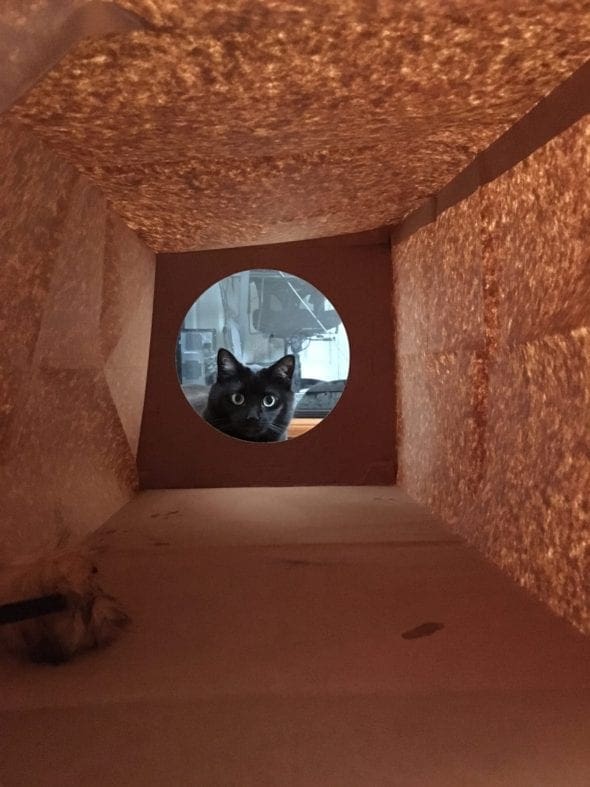
Photo: Pam Johnson-Bennett
Increase Your Cat’s Confidence
No matter how long you’ve lived with your cat, if he’s an under-the-bed hider or in-the-closet hider, you stand a much greater chance of getting him to risk putting one paw outside of the secure area if he feels protected enough.
If your cat tends to walk along the perimeter of rooms and never walks through the more open middle section, place a tunnel right in the center.

Include Play Therapy for Your Cat
Once your tunnels are set up you can enhance their appeal by doing interactive play sessions with your cat there. Even the most secure kitty will enjoy being able to hide in the tunnel to launch a surprise pounce on the toy, but for a frightened or unsure cat, the ability to hide will perhaps relax him just enough to try extending one paw toward the toy. That can be the start of your cat discovering there is safety, security, and even fun when he comes out from under the bed

Need More Information?
For more information on cat behavior and training, refer to the books by best-selling author Pam Johnson-Bennett. Pam’s books are available at bookstores and online. We’ve included links to Amazon here on our website.
